Cory Catfish Care: The Ultimate Guide to Species, Tank Setup, Breeding, and More
Cory catfish, or Corydoras, are a widespread freshwater fish species among aquarium enthusiasts. These small catfish are known for their playful and social behavior, making them a great addition to any community tank.
In this complete guide to Cory catfish care, readers will learn everything they need to know about caring for these unique fish, including species, tank setup, breeding, and more.
Physical characteristics and behavior are essential when caring for Cory’s catfish. These small fish are known for their peaceful nature and can thrive in a community tank with other non-aggressive fish.
They are also bottom-dwellers and spend most of their time scavenging for food on the tank floor. With their playful and curious personalities, Cory catfish will surely add personality and charm to any aquarium.
Key Takeaways
- Cory catfish are a popular freshwater fish species known for their playful and social behavior.
- These peaceful bottom-dwellers can thrive in a community tank with other non-aggressive fish.
- Proper tank setup, water parameters, and feeding are crucial for the health and well-being of Cory catfish.
Physical Characteristics and Behavior
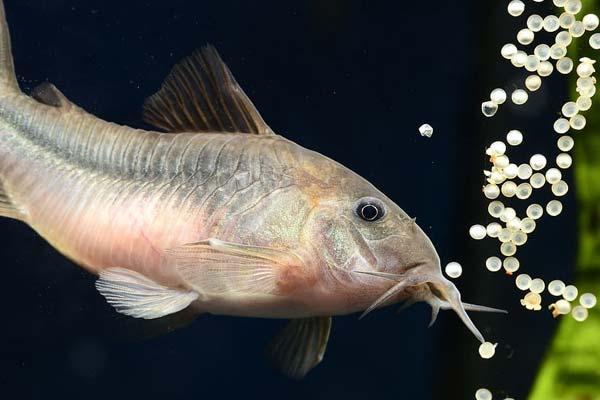
Cory catfish are small, peaceful, and hardy bottom-dwelling fish in various sizes, shapes, and color variations. They are easy to care for, making them ideal for beginner and experienced aquarists.
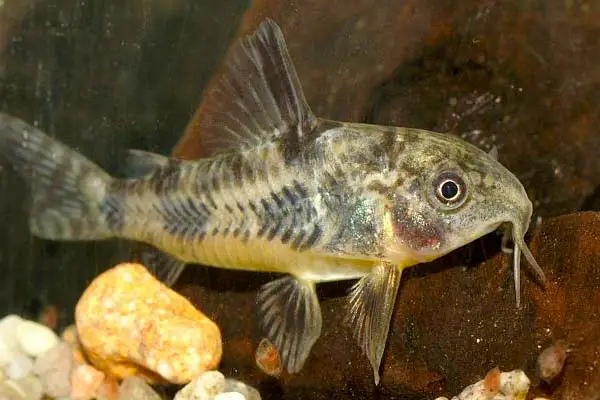
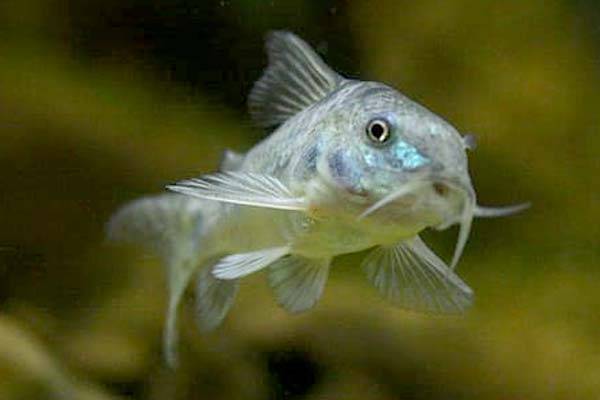
Typically measuring between 1 and 4 inches long, females are slightly larger than males. With a streamlined shape, flattened head, and rounded body, they have small fins and a prominent dorsal fin that spans their body length.
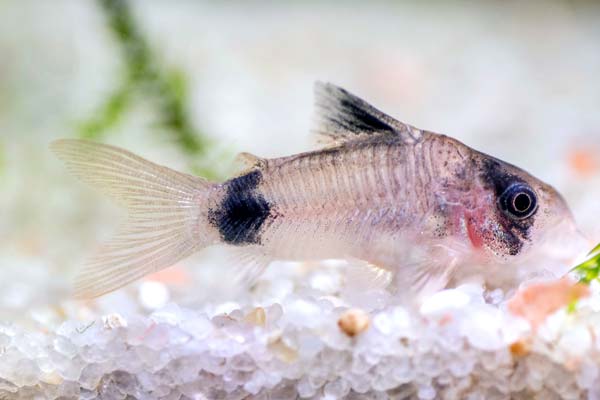
These fish exhibit various colors and patterns, including popular species like emerald catfish, corydoras panda, and Corydoras pygmaeus. Their coloration can vary from pale yellow to dark brown, often displaying distinct patterns on their bodies.
Cory catfish are peaceful shoaling fish, preferring to live in groups of at least six individuals. They spend their time scavenging for food on the aquarium substrate and are known for their playful and active behavior. Their lively nature adds vibrancy to any community aquarium.
Aquarium Setup
Creating an environment resembling their natural habitat is essential when setting up an aquarium for Cory Catfish. This will help to keep them healthy and happy. Here are some key factors to consider when setting up an aquarium for Cory Catfish:
Tank Size, Dimensions, and Substrate
Cory Catfish are shoaling fish and require a minimum of 20 gallons of water for a group of six. A larger tank is always better, providing more swimming room and allowing for a larger group of fish.
The tank should be at least 24 inches long and 12 inches wide. A sand substrate is ideal for Cory Catfish, as it mimics their natural habitat and allows them to sift through the sand for food.
Providing Hiding Spots and Suitable Tankmates
Cory catfish thrive in peaceful community tanks, where they can coexist harmoniously with other fish species. Providing a heavily planted tank with ample hiding spots like caves, driftwood, and rocks is recommended to create an ideal environment for them.
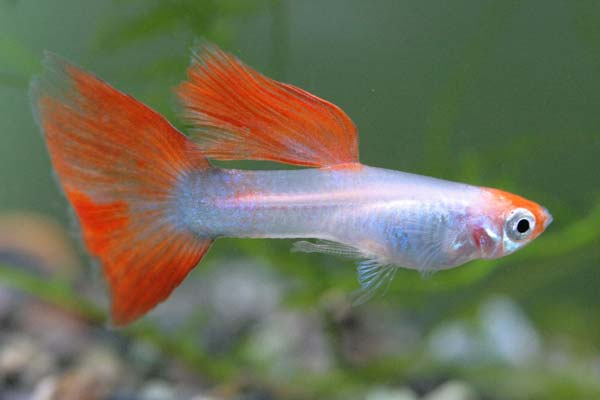
When selecting tankmates for Cory catfish, opt for other peaceful community fish such as tetras, guppies, and rasboras. These species tend to exhibit compatible behaviors and temperaments.
Suitable tankmates include other peaceful community fish, such as tetras, guppies, and rasboras. Avoid keeping them with aggressive or territorial fish, as they may become stressed and unhealthy.
Aquarium, Substrate, Plants, Decoration, and Lighting
Choosing the right aquarium, substrate, plants, decoration, and lighting is crucial when setting up an aquarium for Cory Catfish. A glass aquarium is recommended because it is easy to clean and maintain.
A sand substrate is ideal, allowing the fish to sift through the sand for food. Live plants provide a natural look and help to maintain water quality.
Decorations such as caves, driftwood, and rocks provide hiding spots for the fish. Lighting should be moderate, as Cory Catfish prefer dimly lit environments.
Water Flow and Tank Setup
Cory Catfish prefer slow to moderate water flow, as strong currents can stress them out. A sponge filter is recommended, as it provides gentle water flow and helps to maintain water quality. The tank should be set up with a lid, as Cory Catfish are known to jump out of the water.
Water Parameters and Maintenance
Cory catfish are sensitive to water conditions and require specific parameters to thrive. Maintaining good water quality is crucial to their health and longevity.
Temperature, pH level, and hardness requirements
Cory catfish thrive within specific water parameter ranges. Maintaining an optimal environment for them includes a water temperature between 70°F-80°F.
The pH level should ideally fall within 6.0-8.0, although it can fluctuate depending on the alkalinity levels, which should be between 3-10 dKH.
Hardness is another crucial factor, with a 5-12 dGH range suitable for most cory catfish species.
Filtration, water testing, and regular maintenance
Filtration is essential for maintaining water quality. A good filter should provide mechanical, biological, and chemical filtration. Regular water testing is also necessary to ensure the water parameters are within the appropriate range. Testing kits for pH, nitrate, nitrite, and ammonia are readily available at pet stores.
Regular maintenance is required to keep the tank clean and the water quality in check. Water changes should be done every two weeks, with 25% of the water replaced each time. This helps to remove excess nitrates and other waste products that can increase in the tank.
Additional tips
It is essential to avoid overfeeding cory catfish, as uneaten food can quickly pollute the water. A varied diet of high-quality pellets, flakes, and frozen foods is recommended.
Lastly, it is crucial to acclimate new fish to the tank slowly to avoid shocking them with sudden changes in water conditions. Float the bag containing the new fish in the tank for at least 30 minutes to allow the temperature to equalize, then gradually add some amounts of tank water to the bag over an hour or two.
Feeding and Diet
Cory catfish are omnivorous and require a varied diet to stay healthy and active. A well-rounded diet should include a mix of protein-rich foods and plant-based foods.
Some recommended food options for Cory catfish include bloodworms, blackworms, daphnia, snails, and insects. They also enjoy algae wafers and pellets. Cory catfish can be fed flakes but may not be as nutritious as other options.
It’s important not to overfeed Cory catfish, as they can quickly become overweight. Overfeeding can also lead to poor water quality and health issues. A good rule of thumb is to feed them only what they can consume within a few minutes, two to three times a day.
Cory catfish are bottom-dwellers, so sinking pellets or tablets are a great option for feeding them. This will allow them to feed at their own pace and ensure they receive enough food.
In addition to their regular diet, Cory catfish enjoy live or frozen foods like brine shrimp and bloodworms. These can be given as a treat once or twice a week.
Breeding and Reproduction
Cory catfish are relatively easy to breed in captivity, making them popular among hobbyists. Breeding usually occurs in a separate breeding tank, where the conditions can be controlled to mimic the fish’s natural environment.
Spawning Conditions and Techniques
To encourage breeding, the water temperature in the breeding tank should be raised to around 75-80°F (24-27°C), and the pH should be slightly acidic, around 6.5-7.0. The tank should also have a gentle current and be dimly lit.
To initiate spawning, the male will typically chase the female around the tank, nudging her belly until she releases eggs. The male then fertilizes the eggs and will stick to any nearby surfaces.
Caring for Eggs, Hatching Fry, and Raising the Young
After spawning, the eggs will hatch within 3-5 days. Removing adult fish from the breeding tank at this point is essential, as they may eat the eggs or fry.
The newly hatched fry will initially feed on their yolk sacs and can be fed small amounts of infusoria or liquid fry food once they have absorbed their yolk sacs. They can be gradually transitioned to a diet of crushed flakes or pellets as they grow.
Breeding Tank
A dedicated breeding tank is recommended for breeding cory catfish. The tank should be at least 10 gallons and have a sponge filter or other gentle filtration system to prevent the fry from being sucked up.
The breeding tank should also have plenty of hiding places for the fish, such as caves or plants, to reduce stress and increase the likelihood of successful breeding.
Male and Female
Male and female cory catfish can be challenging to distinguish, especially when young. However, during the breeding season, the male typically has a more slender body and a more pointed anal fin, while the female has a rounder body and a wider anal fin.
Dedicated Breeding Tank
The dedicated breeding tank should be set up specifically for breeding cory catfish. This tank should have a slightly lower water level to reduce the risk of the fry being sucked up by the filter.
The tank should also have a gentle current and be dimly lit to encourage spawning. Live plants and other hiding places should be provided to reduce stress and increase the likelihood of successful breeding.
Common Species and Varieties
Cory catfish are a diverse group of fish with over 170 recognized species. Some of the most popular species and varieties of cory catfish are:
Panda Cory Catfish: These are small, peaceful fish with black patches around their eyes and on their dorsal fin. They are social and should be kept in groups of at least six.
Albino Cory Catfish: These are a popular variety of cory catfish, with white or pinkish bodies and red eyes. They are easy to care for and do well in community tanks.
Peppered Cory Catfish: These are hardy species of cory catfish with a pepper-like pattern on their body. They are active and social fish that do well in groups.
Julii Cory Catfish: These are small, peaceful species with a distinctive black and white stripe pattern. They are active and social fish that do well in groups.
Sterbai Cory Catfish: These are a larger species of cory catfish with a distinctive pattern of black spots on a white or yellowish body. They are peaceful and do well in community tanks.
Bronze Cory Catfish: These are hardy species of cory catfish with a bronze-colored body. They are active and social fish that do well in groups.
Pygmy Cory Catfish: These are the smallest species of cory catfish, with a maximum size of just one inch. They are social and should be kept in groups of at least six.
Each species and variety of cory catfish has its care requirements. Still, they are generally peaceful, social fish that do well in community tanks with other calm fish like barbels and tetras.
They are bottom-dwellers and should be provided with plenty of hiding places and soft substrate to protect their delicate barbels.
Regarding availability, some species and varieties of cory catfish are more commonly sold than others. Panda cories, peppered cories, and julii cories are some of the most frequently sold in the US, while sterbai cories and bronze cories may be harder to find.
Health and Disease Management
Cory catfish are generally hardy and easy to care for, but like any other fish, they are susceptible to diseases and health issues. Here are some common health issues and preventive measures that can help keep your Cory catfish healthy:
Ich (white spot disease): This is a common disease that affects many freshwater fish, including cory catfish. It is caused by a parasite that attaches itself to the fish’s skin and fins. Symptoms may manifest as white spots on the body and fins, loss of appetite and lethargy. To prevent ich, maintain good water quality and avoid overcrowding the tank. If your cory catfish contracts ich, you can treat it with medication or raise the tank temperature to 86°F for a few days.
Fin rot: This bacterial infection specifically targets the fins and tail of the fish. It is usually caused by poor water quality or injury. Symptoms include frayed or discolored fins, lethargy, and loss of appetite. To prevent fin rot, maintain good water quality, and avoid overcrowding the tank. If your cory catfish contracts fin rot, you can treat it with medication or improve water quality.
Stress: Stress can weaken your Cory catfish’s immune system and make it more susceptible to diseases. To minimize stress, provide plenty of hiding places in the tank, maintain good water quality, and avoid sudden water temperature or pH changes.
Lifespan: Cory catfish have a lifespan of about 3-5 years, but with the right care, they can live up to 10 years or more.
Easy to care for: Cory catfish are generally easy to care for and are low maintenance. They are omnivores and will eat various foods, including flakes, pellets, and frozen or live foods. They like sand or fine gravel substrate and prefer plenty of hiding places in the tank.
Additional Tips and Considerations
Maintaining a healthy aquarium environment is crucial for the health of your cory catfish. Regular water changes and tank cleanings are necessary to keep the water quality in check.
Cory catfish are sensitive to high ammonia and nitrite levels, so it’s essential to test the water regularly and keep these levels low. They also prefer a pH range of 6.5-7.5 and a temperature range of 72-78°F.
Aquarists may have some common questions about cory catfish care. One of the most frequently asked questions is whether cory catfish are armored catfish. The answer is yes; cory catfish is a type of armored catfish.
Another question is whether cory catfish can be kept with cichlids. While possible, it’s not recommended as cichlids can be aggressive and may harm the cory catfish.
It’s important to note that cory catfish are shoaling fish and should be kept in groups of at least six. They are peaceful scavengers and can be kept with other calm community tanks fish such as platies, danios, and other cory species. When selecting tank mates, it’s essential to consider their compatibility and avoid aggressive or fin-nipping species.
Providing a separate breeding tank with a sandy substrate and vegetation is crucial for those interested in breeding cory catfish. Live food, such as bloodworms and insects, can be fed to the breeding pair.
It’s important to note that not all cory catfish species are easily bred in captivity, so further research and consultation with experienced aquarists may be necessary.