Clownfish Species: The Colorful Heroes of the Ocean
Clownfish, native to the Pacific and Indian Oceans, are vibrant fish known for their vivid colors. They thrive in the welcoming embrace of warm waters.
They are known for their unique physical characteristics and symbiotic relationship with sea anemones. Clownfish are scientifically classified as Amphiprioninae and part of the damselfish family.
There are over 30 different species of clownfish, each with its unique physical characteristics and adaptations. These fish have a unique ability to change their sex, which helps them to reproduce and maintain their population.
Clownfish are also known for their parental care and life cycle, which involves laying eggs on a flat surface near their sea anemone host.
Despite their popularity in the aquarium trade, clownfish face threats in the wild due to habitat destruction and overfishing. Through conservation efforts, people are working hard to protect these unique and essential species.
This article will explore clownfish species’ diversity, physical characteristics and adaptations, symbiotic relationship with sea anemones, and feeding habits and diet.
We will also discuss the popularization and conservation of clownfish and some interesting facts and trivia about these fascinating fish.
Key Takeaways
- Clownfish are tiny, brightly colored fish that are naturally found in the warm waters of the Pacific and Indian Oceans.
- There are over 30 species of clownfish, each with unique physical characteristics and adaptations.
- Clownfish have a unique symbiotic relationship with sea anemones and face wild threats due to habitat destruction and overfishing.
Clownfish Species
Clownfish are a group of small, colorful fish that belong to the family Pomacentridae and subfamily Amphiprioninae. They are known for their symbiotic relationship with sea anemones, where they live and lay their eggs. There are nearly 30 different species of clownfish, each with its unique characteristics, appearance, and behavior.
Some of the most popular species of clownfish include Amphiprion clarkii, Amphiprion percula, Amphiprion ocellaris, and Premnas biaculeatus, also known as the Maroon clownfish. These species come in different sizes, some growing up to 6 inches long while others are only 2-3 inches long.
One of the most well-known kinds is the Ocellaris clownfish, also called the False Percula clownfish.
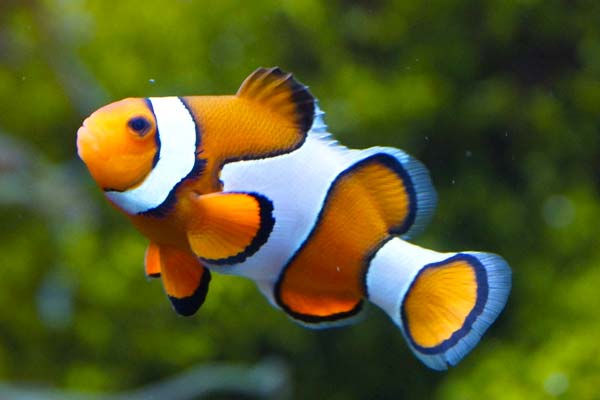
They have a bright orange body with white stripes outlined in black. They are often confused with the Percula clownfish, which has a similar appearance but has thicker black outlines on its white stripes.
Another popular species is Clark’s anemonefish, the Clarkii clownfish. They have a yellow-orange body with white stripes outlined in black. They are larger than most other species, growing up to 6 inches long.
The Pink Skunk clownfish is another unique species with a pinkish-orange body and a white stripe down its back. They are smaller than most other species, growing to only 3 inches long.
Clownfish also come in various color variations, with some species having different colors depending on their geographic location. For example, the Tomato clownfish has a bright red body in the Pacific Ocean, while those in the Indian Ocean have a more muted orange-red color.
In terms of behavior, clownfish are known for being territorial and protective of their anemone homes. They will defend their territory against other fish and predators and even attack scuba divers if they feel threatened.
Clownfish also have a unique mating system, where the male fish will change its sex to female if the female in the group dies.
Physical Characteristics and Adaptations
Clownfish are small, brightly colored fish known for their distinctive appearance. They have a compressed body shape and typically grow between 2 and 5 inches long.
Their most recognizable feature is their bold stripes and bright colors, which serve a purpose beyond just being visually appealing.
The stripes and colors of clownfish are thought to serve as a form of protection against predators. The bright colors and bold stripes make them more visible to potential predators, signaling that they are toxic or dangerous to eat. This is known as aposematism.
The stripes on their bodies also disrupt their appearance, making it more difficult for predators to detect them in the water.
Another adaptation of clownfish is their ability to secrete mucus that protects them from the stinging cells of sea anemones. Clownfish have a symbiotic relationship with certain species of sea anemones, protecting them from predators and a place to lay their eggs.
However, the sea anemone’s stinging cells can harm the clownfish. Clownfish secrete mucus that covers their bodies to protect themselves, preventing the stinging cells from contacting their skin.
Adult clownfish also have three white stripes on their bodies, which help them communicate with other species members. These stripes allow them recognize each other and differentiate between males and females.
Symbiotic Relationship with Sea Anemones
Clownfish and sea anemones have a mutualistic bond that is essential to both species’ survival. The clownfish provide food and nutrients to the sea anemone, while the sea anemone protects the clownfish from predators with its stinging cells.
One of the most fascinating aspects of this symbiotic relationship is clownfish’s anemone home selection behavior. Clownfish are known to be very picky when choosing a sea anemone to live in.
They typically prefer to live in certain species of sea anemones, such as the magnificent sea anemone, sebae anemone, and bubble tip anemone. This behavior is thought to be related to food availability and protection from predators.
Even though sea anemones have stinging cells, clownfish are immune to their sting. This allows the clownfish to swim freely among the sea anemone’s tentacles without harm.
The clownfish also use the sea anemone’s tentacles as protection from predators. When threatened, the clownfish will retreat to the safety of the sea anemone’s tentacles, which provide a haven from predators.
In addition to providing protection, the sea anemone provides food and nutrients to the clownfish. Sea anemones are known to host algae, which provides a source of food for the clownfish. The clownfish also feed on the tiny organisms attracted to the sea anemone’s tentacles.
Reproduction, Parental Care, and Life Cycle
Clownfish are sequential hermaphrodites, meaning they can change their sex from male to female. They start as males; then, as they mature, some will change sex and become females. Social cues, such as the absence of a dominant female, and hormonal changes trigger this process.
Regarding courtship, clownfish perform a series of behaviors to attract mates. The male will chase the female and swim together in circles. The male will then lead the female to the chosen nesting site, which is usually a flat surface near the anemone. The male will then clean the area and prepare it for the eggs.
The female will lay between 100 and 1,000 eggs, which will attach to the substrate of the nest. The eggs are protected by a mucus layer that prevents fungi and bacteria from harming them. The male will guard and fan the eggs with his fins to provide oxygen.
The eggs will hatch within 6 to 10 days, with the exact duration influenced by the temperature of the water.
The larvae are planktonic and drift in the water column for several weeks before settling on the reef. During this time, they are vulnerable to predation and environmental factors.
Once the larvae settle on the reef, they will find an anemone to call home. Clownfish will only live in certain species of anemones, which protect them from predators. The anemone will then become the center of their social and reproductive lives.
Feeding Habits and Diet
Clownfish have a varied diet; they are omnivorous and consume both plants and animals. In their native environment, they primarily feed on small invertebrates and algae.
They feed on a variety of small crustaceans, mollusks, and worms. Additionally, they consume algae growing on rocks and other surfaces.
Clownfish are opportunistic feeders and have been observed scavenging from anemone meals. They eat their host anemones’ leftover food, including small fish and crustaceans. This scavenging behavior is crucial for clownfish living in environments where food is scarce.
In captivity, clownfish are usually fed a diet of commercial fish food supplemented with fresh or frozen shrimp, krill, and other small marine invertebrates. It is important to note that their diet in captivity should mimic their natural diet as closely as possible to ensure their health and well-being.
Popularization and Conservation
The popularity of clownfish has undoubtedly been influenced by the 2003 movie “Finding Nemo.” The movie’s portrayal of the colorful and charismatic fish has increased demand for clownfish as pets.
However, this has also resulted in negative consequences for both wild populations and the clownfish trade.
The global aquarium trade has impacted the wild populations of clownfish, as the demand for these fish has led to overfishing and destructive fishing practices. This has caused a decline in clownfish populations in some areas, harming the coral reef ecosystems where they live.
To address these issues, conservation initiatives have been established to protect clownfish and their coral reef habitats. National Geographic has been involved in several initiatives, such as the Pristine Seas project, which aims to protect and restore marine ecosystems worldwide.
In addition, efforts have been made to promote responsible aquarium keeping, including breeding clownfish in captivity to reduce the demand for wild-caught fish. This has helped reduce the aquarium trade’s negative impact on wild populations.
Clownfish in Aquariums
Clownfish are popular for home aquariums due to their vibrant colors and playful personalities. However, it is crucial to understand the proper care and conditions necessary to keep these fish healthy and happy in captivity.
Regarding tank size, a minimum of 40 gallons is recommended for a pair of clownfish. Maintaining stable water conditions, including a temperature range of 75-82°F and a pH range of 8.1-8.4, is essential. A saltwater aquarium with a reef tank setup is ideal for clownfish, who enjoy hiding in and around the coral.
It is also vital to consider suitable tank mates for clownfish. They are generally peaceful but can become aggressive towards other fish that resemble their species or are similar in size and shape. It is generally best to avoid keeping them with aggressive fish or invertebrates.
When sourcing clownfish for your aquarium, it is crucial to prioritize responsible and sustainable practices. Look for captive-bred clownfish, bred in controlled environments and less likely to carry diseases or parasites than wild-caught fish.
Threats and Conservation
Clownfish populations face various challenges that threaten their survival. These challenges include habitat destruction, pollution, and climate change.
Habitat destruction is one of the primary threats to clownfish, as it destroys their natural habitat of coral reefs and anemones. Pollution, such as oil spills and plastic waste, negatively impacts clownfish populations by contaminating their environment and food sources.
Climate change poses another significant threat to clownfish, as rising sea temperatures and ocean acidification can harm the coral reefs they depend on.
To address these threats, conservation efforts have been put in place to protect clownfish and preserve coral reef ecosystems. These efforts include the establishment of marine protected areas, the enforcement of fishing regulations, and the promotion of sustainable tourism practices.
Furthermore, scientists are researching to gain a deeper understanding of how climate change affects clownfish and coral reefs. They aim to develop effective strategies to lessen these impacts.
The symbiotic relationship between clownfish and anemones has also been the subject of conservation efforts. Anemones are essential hosts for clownfish, and their decline can significantly impact clownfish populations.
Efforts are being made to protect anemones from habitat destruction and pollution and promote sustainable practices in the aquarium trade.
Interesting Facts and Trivia
Clownfish are fascinating creatures with a range of interesting facts and trivia associated with them. Here are some of the most noteworthy:
- Clownfish can change gender. They are born as males but can change into females if necessary. This is known as sequential hermaphroditism.
- Clownfish have a hierarchical social structure. The largest and most dominant fish is the female, followed by the male and the juveniles. When the female dies, the male changes gender and becomes the dominant female.
- Clownfish can resist the venom of anemones, which is why they can live near them. Clownfish are the only fish that can live among the tentacles of anemones without being stung.
- Clownfish are found in the Red Sea, the Pacific Ocean, and Japan. They are found in warm waters and are often associated with coral reefs.
- Clownfish have been used in medicine to develop cystic fibrosis and muscular dystrophy treatments. They have also been involved in researching hearing loss and the development of hearing aids.
- In some countries, it is illegal to keep clownfish as pets without a permit. This is because of concerns about overfishing and its impact on wild populations.
- Clownfish have been the subject of numerous scientific studies, including research into their behavior, communication, and social structure.
- There are more than 30 different species of clownfish. Some of the most well-known include the orange clownfish, made famous by Finding Nemo, and the pink skunk clownfish.
In conclusion, clownfish are a fascinating and diverse group of fish with a range of interesting facts and trivia associated with them.
Their ability to change gender, hierarchical social structure, and resistance to anemone venom makes them unique.
Furthermore, their presence in the Red Sea, the Pacific Ocean, and around Japan has made them an essential part of many different cultures and ecosystems.