Why Birds Take Dust Baths and Roll in Dirt: The Surprising Benefits
Birds often take dust baths and roll in the dirt, which may seem odd to humans. However, these activities are crucial for a bird’s health and well-being. By exploring the reasons behind these behaviors, we can better understand the importance of these activities to birds.
Dust baths are common among birds, where they roll around in dust or sand to clean their feathers and skin. This behavior is essential for maintaining healthy feathers, as the dust absorbs excess oil and removes dry skin cells.
Regular dust baths make a bird’s feathers greasy and matted, making it easier for them to fly efficiently and stay warm in cold weather.
Rolling in the dirt is another behavior that may seem strange to humans, but it serves a similar purpose to dust bathing. By rubbing their bodies in the dirt, birds can remove parasites and other unwanted debris from their feathers and skin.
This behavior is crucial for ground-dwelling birds, who are likelier to pick up parasites and other dirt from their environment.
Importance of Dust Baths for Birds
Dust bathing is crucial to a bird’s grooming routine and serves several essential purposes. This section will discuss the importance of dust baths for birds, including feather maintenance and hygiene, flight enhancement, and aerodynamics.
Feather Maintenance and Hygiene
Birds’ feathers play a vital role in their survival, and keeping them in good condition is essential. Dust baths help maintain healthy feathers by removing excess oils and grease. If these oils are not removed, they can attract dirt and debris, leading to clumps and matting. This can make it more complex for birds to fly and insulate themselves, affecting their overall health.
Dust baths also help control parasites and pests, such as lice and feather mites, which can cause infection and disease. By dusting, birds can remove these unwanted guests from their plumage, keeping their feathers clean and healthy.
Flight Enhancement and Aerodynamics
Maintaining feather condition is crucial for optimal flight, and dust baths are vital. When birds dust bathe, the dust particles work through the feathers, cleaning and removing any debris that may be stuck. The vigorous flapping and rolling during a dust bath help distribute the dust particles evenly and ensure that every feather is covered.
This even distribution of dust particles helps improve aerodynamic performance, making it easier for birds to fly. Dusting can also help keep feathers flexible, essential for flying and grooming.
The Behavior of Birds: Dust Baths and Rolling in Dirt
Birds are known for their unique behaviors, including dust baths and rolling in the dirt. This behavior is observed in various species of birds, including sparrows, wrens, ostriches, wild turkeys, thrushes, and larks.
Dust Baths: How and Why Birds Engage in Dusting
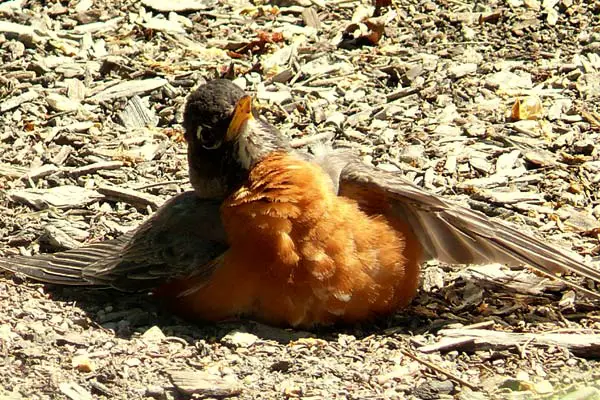
Birds create a wallow in fine dirt, soil, or sand, then spread the dust on their bodies, coating smaller feathers. The dust absorbs excess oil and removes dry skin, helping to keep the feathers from becoming too greasy or matted.
Clean feathers are essential for flight and insulation. If a bird’s feathers become greasy or matted, it cannot fly as efficiently or maintain its body temperature.
Dust baths also help birds remove parasites, such as mites, from their feathers and skin. Birds can dislodge these unwanted hitchhikers by flapping and shaking in the dust.
Rolling in Dirt: Understanding the Purpose and Behavior
Birds also roll in the dirt, and there are several reasons behind this behavior. One possible benefit is that it helps birds clean and maintain their feathers. Rolling in dirt can also help birds cool down in hot weather by exposing their skin to cooler soil.
Another possible function of rolling in dirt is to deter predators. Birds may roll in the dirt to disguise their scent, making it harder for predators to track them.
In arid regions, dust-bathing is essential for many birds, including raptors, kestrels, and emus. These birds may not have access to water sources for bathing, so they rely on dust to keep their feathers clean and healthy.
Backyard bird enthusiasts can create a dust-bathing area for their feathered friends by providing a shallow depression filled with dry earth or sand. Birds will use this area to roll and fluff their feathers. Landscaping with shrubs and trees can also provide perching and dust-bathing opportunities for birds.
Factors Influencing Birds’ Dust Bathing and Rolling Behavior
Birds engage in dust bathing and rolling behavior for various reasons. The following are some of the factors that influence their behavior:
Environmental Factors
The soil’s composition and texture significantly influence birds’ dust bathing and rolling behavior. Birds prefer soils with a loose texture, allowing them to work the dust into their feathers quickly. They also prefer soils low in clay and high in sand, which helps absorb excess oil from their feathers.
Sunlight exposure and temperature also affect birds’ dust bathing and rolling behavior. Birds prefer to dust bathe during the early morning or late afternoon when the sun is not too intense. High temperatures can cause birds to avoid dust bathing altogether.
Seasonal and Regional Patterns
Birds’ dust bathing and rolling behavior vary depending on the season and region. In arid climates and during hotter seasons, birds tend to dust bathe more frequently to remove excess oil and dry skin from their feathers. In contrast, during the wet season, birds are less likely to engage in dust bathing.
Regional variations in dust bathing and rolling behavior also exist. For example, California quail, ring-necked pheasants, and wild turkeys are known to bathe frequently, while thrushes and larks are less likely to engage in this behavior.
Birds also prefer to dust bathe in areas with access to water sources. After dust bathing, they must preen their feathers to remove any remaining dust particles. Having access to water helps them to clean their feathers more effectively.
Social Behavior: Birds’ Dust Bathing and Rolling Together
Birds’ dust bathing and rolling behavior is only sometimes a solitary activity. Many bird species engage in communal dusting and rolling. This behavior is not limited to a single species or habitat but is seen across various birds in different environments.
Benefits of group dusting and rolling behavior
One of the main benefits of communal dusting and rolling is the removal of mites and other parasites. When birds engage in this behavior together, they can help each other to reach areas that are difficult to access alone. Additionally, group dusting can help to reduce the risk of predator attacks, as the birds can watch out for each other while they are vulnerable.
Examples of bird species that engage in communal activities
Birds that engage in communal dusting and rolling behavior include wrens, ostriches, wild turkeys, California quail, ring-necked pheasants, thrushes, larks, and many others. Raptors such as kestrels and emus have also been observed engaging in this behavior.
In arid environments, communal dusting and rolling can be especially important for maintaining healthy feathers and skin. In backyard settings, providing a dust bath area can attract a variety of songbirds and game birds.
Landscaping for communal dusting and rolling
Consider adding a dust bath area to your landscaping to encourage communal dusting and rolling behavior in backyard birds. This can be as simple as a patch of bare ground or sand or a shallow container filled with dirt or sand. Providing perches, shrubs, and trees nearby can encourage birds to visit and engage in this behavior.
Creating a Bird-Friendly Dust Bath and Rolling Area
When creating a bird-friendly dust bath and rolling area, several things must be considered to ensure the birds will use and enjoy the area.
Location and Soil Considerations
Choosing an appropriate site for a dust bath and rolling area is crucial. Birds prefer open and sunny areas with loose, dry soil or sand. It is important to avoid areas with heavy foot traffic or where chemicals have been used, as this can harm birds.
Suitable soil types and textures include sandy loam, loamy sand, and sandy clay loam. Too heavy or compacted soil will not work well for a dust bath. It is crucial to ensure the soil is dry and crumbly, as birds prefer to create wallows in this type of soil.
Providing Safety and Shelter
Birds need protection and perches for safety during dusting and rolling. Adding plants, rocks, and other landscaping features can provide bird shelter and a sense of security. Shrubs and trees can also provide shade and shelter from predators.
It is vital to ensure that the dust bathing area is located near a water source, such as a bird bath, so birds can clean themselves after dusting. Adding a border around the area can also help to keep the soil contained and prevent it from spreading to unwanted areas.
For those with pet birds, creating a separate dust bathing area is vital to prevent the spread of disease. This area should be located away from other birds and cleaned regularly to prevent bacteria buildup.
Providing additional water sources and shade may be necessary in arid regions to ensure that birds can access the necessary resources.
Observing and Enjoying Birds’ Dust Bathing and Rolling Behavior
Birds’ dust bathing and rolling behavior is a fascinating sight to observe. Here are some tips for observing and appreciating these behaviors:
- Look for areas with loose, dry soil or sand, as these are the preferred locations for dust bathing.
- Be patient and quiet when observing birds, as they can be easily startled and may stop their behavior if they feel threatened.
- Use binoculars or a spotting scope to look closer without disturbing the birds.
- Watch for flapping and rolling movements, common behaviors during dust bathing.
- Listen for vocalizations, as some birds may make sounds while dust bathing.
Birdwatching can contribute to conservation and education by providing valuable information about bird behavior and habitat use. By observing and documenting dust bathing and rolling behaviors, birdwatchers can help researchers better understand these critical aspects of animal behavior.
Dust baths are essential for birds, as they help remove excess oils and dry skin from feathers. This helps keep feathers clean and in good condition, essential for flight and insulation. Dust bathing also helps birds remove parasites and other irritants from their feathers, which can help prevent infestations and infections.
While dust bathing is most commonly observed in backyard birds and songbirds, many other species exhibit this behavior. Raptors, such as kestrels, have been observed dust bathing, as have emus and game birds. In arid environments, dust bathing may be essential for birds to maintain their feathers and avoid dehydration.
Conclusion
In conclusion, dust bathing and rolling in the dirt are essential to a bird’s grooming process. It helps them to maintain their feathers and skin in excellent condition.
By taking a dust bath, birds can remove excess oils, dead skin cells, and parasites from their feathers, which can become matted and greasy. This unwanted grease and matted feathers can make flying more complex and affect a bird’s aerodynamics.
Birders should not be alarmed by the erratic motion, crazy posture, and cloud of dust the bird is raising while taking a dust bath. Birds indulge in a natural behavior to keep themselves clean and healthy. Interestingly, not all birds practice this behavior, but it is common among many species of birds.
Birders can encourage birds to engage in dust bathing by creating a suitable environment for them. They can provide a shallow dish or tray filled with sand, soil, or dust in their backyard or garden. The dish should be placed in an open area that is protected from predators, and it should be kept dry to prevent the growth of harmful bacteria.