Why Is My Axolotl Hiding? Understanding the Reasons Behind Your Pet’s Behavior
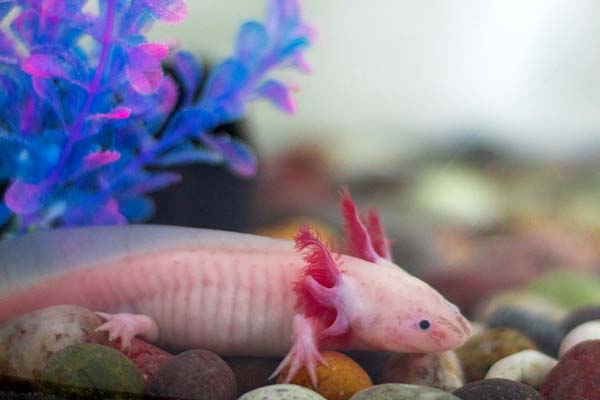
Axolotls are truly captivating creatures. They are known for their unique appearance and fascinating behaviors, which make them a subject of great interest and curiosity.
However, if you are an axolotl owner, you may have noticed that your pet spends a lot of time hiding. This can be concerning, especially if you are trying to understand why your axolotl is hiding.
One common reason why axolotls hide is to avoid bright light. These creatures are nocturnal and prefer low-light conditions. As a result, they may spend most of their time in hiding during the day and become more active at night. If you have a brightly lit tank, your axolotl may feel stressed and hide more often.
It’s important to note that hiding is a natural behavior for axolotls. They stay in their hides to avoid light. As you said, they will be active when we are usually asleep, so there is nothing abnormal about him being hidden throughout the day. However, if you notice other signs of stress or illness, such as loss of appetite or lethargy, it may be time to consult a veterinarian.
Understanding Axolotls
Axolotls are fascinating creatures that are becoming increasingly popular as pets. They are a type of salamander that is native to Mexico and are also known as the Mexican walking fish.
They uniquely retain their juvenile form throughout life, a phenomenon known as neoteny. This means they remain aquatic and do not undergo metamorphosis into a terrestrial adult form.
Axolotls are nocturnal creatures, meaning they are most active at night. They are also solitary creatures and prefer to live alone. In their natural habitat, they can be found in the canals and lakes of Mexico City, where they feed on small fish, insects, and other aquatic animals.
Axolotls are well-known for their regenerative abilities. They can regrow lost limbs and parts of their brain and spinal cord. This makes them a popular subject for scientific research.
Axolotls need a minimum 20-gallon tank with a filter for clean water. They prefer cool water (pH 6.5-7.5) and require hiding places like plants or rocks for comfort.
As for whether hiding is a preferred behavior for axolotls, it is essential to note that they are naturally shy and solitary creatures. While they may come out of hiding to explore their environment or feed, they will often retreat to their hiding spot when they feel threatened or stressed. Therefore, providing adequate hiding places is vital for their well-being and comfort.
Reasons for Axolotls Hiding
Axolotls are known for their hiding behavior, but sometimes they may hide excessively, which could be a cause for concern.
Normal hiding behavior vs. excessive hiding
Understanding that axolotls are nocturnal animals and prefer to hide during the day is essential. Hiding is a natural behavior for axolotls, and they use it to protect themselves from predators. However, if an axolotl is hiding excessively and not coming out even at night, it could be a sign of a problem.
Factors that may cause excessive hiding
- Stress-related factors: Axolotls are sensitive to changes in their environment, and any changes, such as fluctuations in water temperature, poor water quality, and bright light, can cause stress. Stress can lead to excessive hiding behavior.
- Environmental factors: Poor water quality due to high ammonia or nitrite levels can cause stress and lead to excessive hiding behavior. Additionally, environmental changes, such as moving to a new tank or adding new tank mates, can cause stress and lead to hiding behavior.
- Health-related factors: Illness, parasites, bacterial infections, and disease can all cause an axolotl to hide excessively. If an axolotl is hiding more than usual and showing other signs of illness, such as lethargy or loss of appetite, it is crucial to seek veterinary care.
How to Help Your Axolotl
If you notice your axolotl hiding frequently, there are a few things you can do to help them feel more comfortable in their environment. Here are some tips to help your axolotl feel at home:
Assessing the Tank Setup
- Tank size and layout: Ensure your axolotl has enough space to swim around and explore. A 20-gallon tank is recommended for one axolotl, with an additional 10 gallons per additional axolotl. Provide hiding places and decorations, but ensure they only take up a little space in the tank.
- Water parameters and filtration: Keep the water clean and well-filtered. Test the water regularly for nitrate levels, and perform partial water changes as needed. Use a filter appropriate for the tank size and follow the manufacturer’s instructions.
- Providing appropriate hiding places: Axolotls like to hide and feel secure in their environment. Provide hiding places such as PVC pipes, logs, and plants. Ensure any decorations or substrates are safe for axolotls and won’t harm them.
Minimizing Stress Factors
- Gentle handling techniques: When handling your axolotl, be gentle and avoid sudden movements. Use a net to catch them if necessary, and never grab them by the tail.
- Creating a quiet and calm environment: Axolotls are sensitive to noise and vibrations, so keep their tank in a quiet area. Avoid tapping on the glass or making sudden movements near the tank.
- Ensuring compatible tankmates: Axolotls are best kept alone or with other axolotls. Avoid keeping them with fish or other animals that may stress or harm them.
Identifying and Addressing Health Issues
- Regular health checks: Monitor your axolotl’s behavior and appearance. Look for signs of illness such as lethargy, loss of appetite, or abnormal behavior.
- Consulting a veterinarian if necessary: If you suspect your axolotl may be sick, consult a veterinarian specializing in exotic pets. They can help diagnose and treat any health issues.
- Proper nutrition and care for axolotls: Ensure your axolotl gets a balanced diet and appropriate care. Feed them various foods, such as worms, shrimp, and pellets. Keep the tank clean and maintain appropriate water parameters.
Addressing Specific Scenarios
Axolotls are known to be shy and solitary creatures, meaning they may hide from time to time. However, there are specific scenarios where hiding may cause concern.
Here are some specific scenarios axolotl owners may encounter and how to address them.
- Why is my newly bought axolotl hiding suspiciously?
If you have just brought home a new axolotl and it is hiding, it is essential to remember that it is likely stressed due to the change in environment.
Axolotls are highly sensitive to fluctuations in water temperature, water quality, and lighting conditions. It is crucial to ensure that the new tank is cycled correctly and that the water parameters are suitable for axolotls. Additionally, it is recommended to provide hiding places for the axolotl to feel secure in its new home.
- Is it normal for axolotls to hide all day?
While it is normal for axolotls to hide occasionally, hiding all day may cause concern. If an axolotl is hiding all day, it may be due to stress or feeling threatened by its environment.
Monitoring the water parameters and ensuring the tank is correctly set up with hiding places is crucial. If an axolotl remains hidden throughout the day, it is advisable to seek veterinary advice to exclude any underlying health concerns.
- What kind of hiding places do axolotls appreciate?
Axolotls appreciate hiding places that are dark and provide shelter from bright light. Hiding places can include caves, plants, and decorations that provide cover. It is crucial to ensure that the hiding places are big enough to accommodate the axolotl and do not have any sharp edges that may harm the axolotl’s sensitive skin.
- Things to consider while adding hiding places for axolotls
When adding hiding places for axolotls, it is crucial to consider the following:
- Ensure that the hiding places are big enough to accommodate the axolotl
- Provide dark hiding places and provide shelter from bright light
- Avoid hiding places with sharp edges that may harm the axolotl’s sensitive skin
- Ensure that the hiding places are easy to clean and do not accumulate debris or waste
Suppose you are still determining the best hiding places for your axolotl. In that case, it may be worth consulting with a veterinarian or doing further research to ensure your axolotl has a safe and comfortable environment.
Conclusion
In conclusion, there are several reasons why an axolotl may hide. The most common reasons include stress, environmental factors, and natural behavior. Axolotl owners should start by closely monitoring their pet’s behavior and environment to ensure their health and well-being. Regular observation and maintenance are vital for the thriving of these captivating creatures.
Water temperature, water quality, or bright lighting changes can cause stress. Axolotls are sensitive creatures and may hide to avoid stress. Owners should ensure that their pet’s environment is stable and provide dim lighting to reduce stress.
Environmental factors such as new tank syndrome or inadequate hiding spots can cause axolotls to hide. Owners should provide a suitable environment for their pets, including proper hiding spots and appropriate water parameters.
It is important to note that axolotls are naturally shy and solitary creatures. It is usual for them to hide for long periods, especially during the day. Owners should not be alarmed if they do not see their axolotl during the day and only see them at night.